
In 2024, Saudi Arabia reported 1,301 deaths during Hajj, as temperatures in Makkah reached 51.8°C. Hajj 2027 falls in mid-May, when daytime highs in Makkah average around 42°C. Most of what keeps pilgrims well is planning done before they leave home.
Vaccines protect you against a few specific infections. The bigger day-to-day risks on Hajj are heat, respiratory infections, foot injuries and upset stomachs, and you can do a lot about all of them. This guide covers each one, with a health packing list at the end. It’s written by the travel health team at Evans Pharmacy in Malvern and Claines Pharmacy in Worcester.
Heat: the biggest risk
Of the pilgrims who died in 2024, Saudi Arabia said 83% didn’t have Hajj permits and had walked long distances in direct sun without shelter. Registered pilgrims have transport, tents and cooling, but the heat is still serious, particularly for older pilgrims and anyone with a heart condition or diabetes.
Know the warning signs. Headache, dizziness, nausea, heavy sweating and cramps mean heat exhaustion: move to shade, cool down and drink. If someone becomes confused, stops making sense or collapses, treat it as heatstroke and get emergency medical help straight away.
Hajj cough and respiratory infections
Respiratory infections are the most common illness among pilgrims. Many come home with “Hajj cough”, a viral chest infection that’s usually mild but can be severe. Millions of people sharing the same spaces, often tired and short of sleep, is the perfect setting for it.
Meningitis
The meningitis ACWY vaccine is required for Hajj because outbreaks have followed past pilgrimages, and pilgrims have carried the infection home. The vaccine covers four strains, but not every cause of meningitis or septicaemia, so know the signs: fever, severe headache, stiff neck, sensitivity to light, a rash that doesn’t fade under pressure, or feeling suddenly and seriously unwell. Get urgent medical help and say you’ve been on Hajj.
Your feet
Pilgrims walk long distances, often in sandals and sometimes barefoot on hot ground. Minor foot injuries are common, and a small blister can become infected, particularly if you have diabetes or poor circulation.
Food and water
Choose freshly cooked food that’s served hot, wash fruit before eating it, and avoid unpasteurised milk and raw or undercooked meat. Skip tins that are dented, rusty or leaking. Carry oral rehydration sachets in case of diarrhoea, and wash your hands before eating and after using the toilet.
Head shaving
At the end of Hajj, men shave or shorten their hair. Licensed barbers use a new blade for each pilgrim, but unlicensed ones may not, and a used blade can pass on hepatitis B, hepatitis C and HIV. Use a licensed barber or bring your own disposable razor. Hepatitis B vaccination is recommended; there’s no vaccine for hepatitis C or HIV.
If you have a long-term condition
Take enough of every regular medicine for the whole trip plus a few extra days, in its original packaging, with a copy of your prescriptions and a summary of your conditions from your GP. Split your medicines between your hand luggage and your main bag. If you use insulin, ask your diabetes team how to keep it cool and how to manage your doses around long days and heat.
Some serious conditions rule out Hajj altogether. Our guide to the Hajj 2027 medical certificate sets out Saudi Arabia’s list.
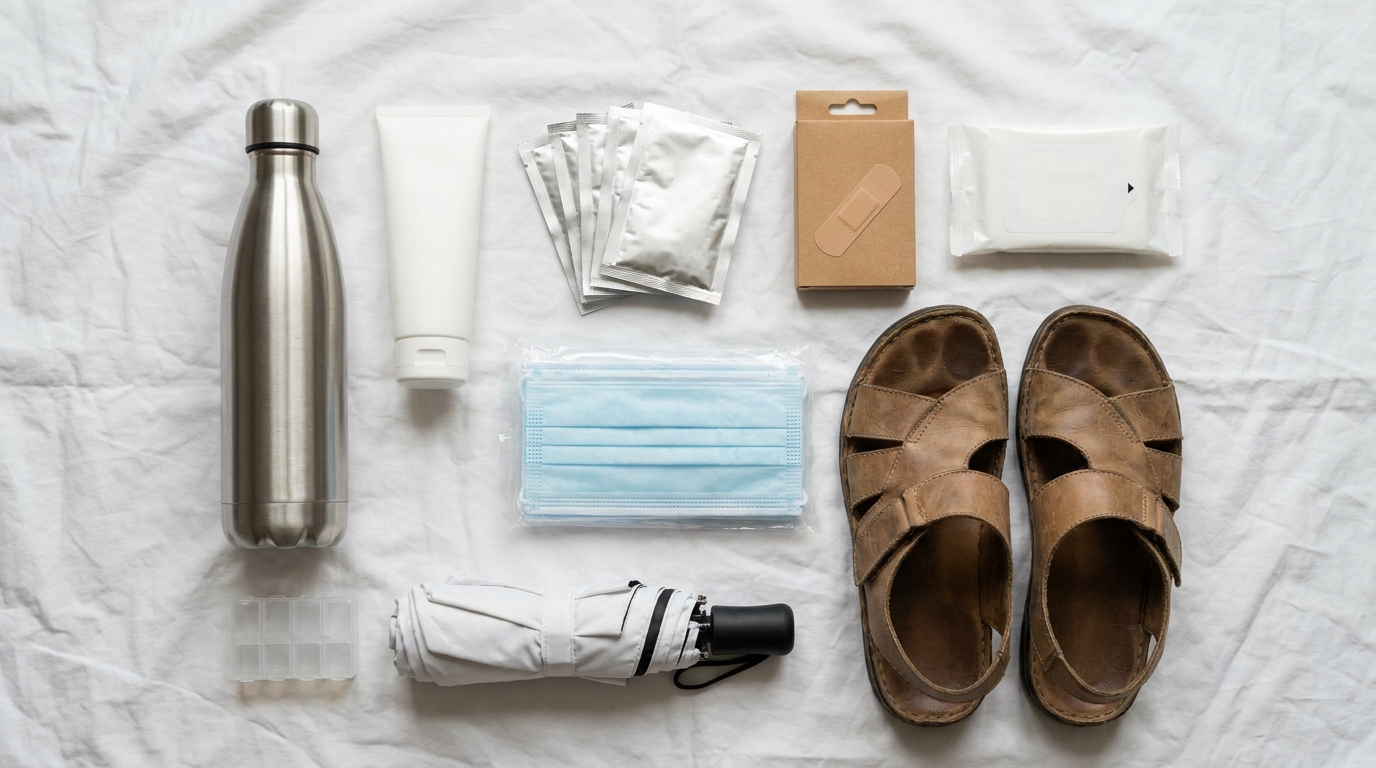
Your health packing list
Want your Hajj vaccinations sorted at one appointment? Book in Malvern or book in Worcester.
When you get home
If you feel unwell in the weeks after you come back, particularly with a fever, flu-like symptoms, a rash or diarrhoea, phone your GP or NHS 111 and tell them you’ve been on Hajj. If you develop a fever, cough or breathlessness within 14 days of travel, say whether you had any contact with camels or with people who were unwell.
What it costs
All prices match our current price list.
Frequently asked questions
How hot will it be for Hajj 2027?
Hajj 2027 is expected in mid-May, when daytime highs in Makkah average around 42°C and can go higher. Plan for heat throughout.
What is Hajj cough?
A viral chest infection that many pilgrims pick up in the crowds. It’s usually mild, but it can be severe. A flu jab, masks in crowds and regular hand washing all reduce the risk.
Should I wear a mask on Hajj?
Saudi Arabia advises wearing a face mask during rituals and in crowded places.
What medicines should I take on Hajj?
All your regular medicines, enough for the whole trip and a few extra days, in their original packaging, plus simple remedies such as paracetamol and oral rehydration sachets. Ask your GP or pharmacist about anything specific to your health.
Is it safe to go on Hajj with diabetes?
Many people with diabetes perform Hajj. Speak to your GP or diabetes team before you go, plan for the heat, carry your medicines in their original packaging, and check your feet every day.
Which vaccines do I need for Hajj?
The meningitis ACWY vaccine is required for every pilgrim. Flu and hepatitis B are recommended, and you should be up to date with your routine vaccines. Our Hajj and Umrah vaccinations guide has the full list.
Written by the Malvern Travel Clinic team and based on Saudi Ministry of Health pilgrimage requirements and NaTHNaC TravelHealthPro guidance current at the date of review.
This guide is general information, not medical advice; your consultation determines what is right for you.


